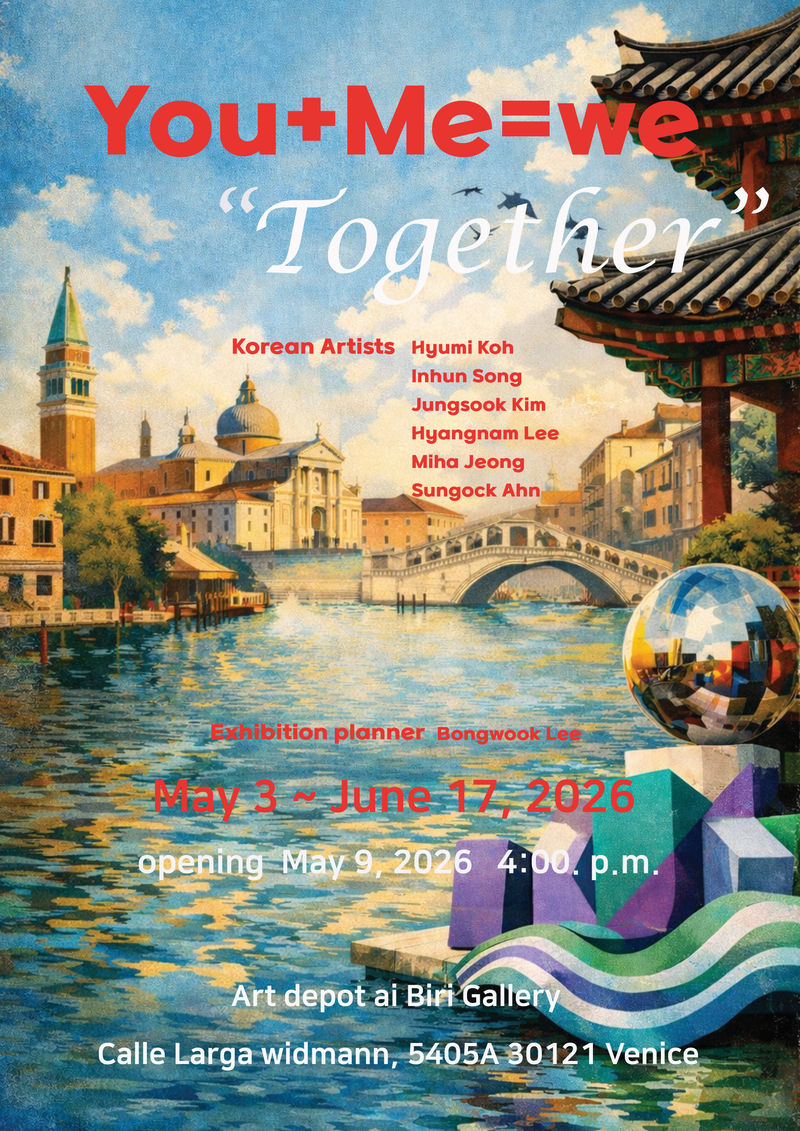
You+Me=we "Together"
Hyunmi Koh, Jungsook Kim, Inhun Song, Sungock Ahn, Hyangnam Lee, Miha Jeong
5/2/2026 - 6/16/2026
DESCRIPTION
Listening to the Unheard: Toward a Shared Community of Voices
Lee, Bongwook,
Ph.D. in Art,
Director & Curator, EYN Korea
This exhibition focuses on stories that have remained at the margins—those of small and vulnerable beings whose voices have not always been recognized within the language of institutions and systems of power. By bringing visibility to voices that were often unheard or dismissed as powerless, the exhibition invites us to reconsider what has been spoken and what has remained silent.
To shed light on what has long been unseen, and to give form to emotions and memories that have lingered in silence, is more than an act of representation. It is a critical practice of restoring presence and dignity. Rather than consuming pain and memory, the exhibition seeks to recover a sense of life and belonging, demonstrating how art can serve as a meaningful ethical response to the world.
When you and I meet and become ‘we’, individual stories move beyond isolation and gain new meaning through relationships. Difference is not a cause for division, but an opportunity to reflect and expand one another. In this encounter, the possibility of living together opens toward a renewed social imagination.
Just as small stories gather to form a world, the works presented in this exhibition create another landscape—one shaped by empathy and solidarity. Here, community is not a fixed form, but an ongoing process of connection and renewal, and art becomes a living language that participates in that process. The exhibition records moments where personal stories connect with the lives of others, proposing dialogue over silence and solidarity over isolation. This is both an aesthetic and a social choice—an expression of how art engages with the world.
This artistic testimony, which suggests that you and I can become a shared community, is completed when viewers move beyond passive observation and listen with attention and care. In doing so, art becomes more than a means of expression; it becomes a language through which we learn how to live together.
Through the gathering of many small stories, this exhibition offers a contemporary reflection on the possibility of moving beyond the boundaries between “I” and “you,” and discovering the relational meaning of “we.”
이 전시는 중심이 아닌 주변부, 제도와 권력의 언어로 포착되지 않았던 작고 연약한 존재들의 이야기에 주목한다. 쉽게 들리지 않았고, 종종 무력하다고 간주되어 왔던 목소리들을 예술이라는 매개를 통해 가시화함으로써, 우리는 무엇이 말해질 수 있고 무엇이 침묵되어 왔는가를 다시 질문하고자 한다.
보이지 않던 것들에 빛을 비추고, 침묵 속에 머물러 있던 감정과 기억을 형상과 언어로 호출하는 행위는 단순한 재현을 넘어 존재를 재위치 시키는 비판적 실천이다. 이는 상처와 기억을 소비하는 것이 아니라, 존엄과 삶의 감각을 회복하는 과정이며, 예술이 수행할 수 있는 윤리적 개입의 한 방식이기도 하다.
너와 내가 만나 ‘우리’가 되는 순간, 개별적 서사는 고립된 개인의 이야기를 넘어 관계적 의미를 획득한다. 각자의 다름은 충돌이나 분리의 이유가 아니라, 서로를 비추고 확장시키는 거울로 작동하며, 그 안에서 함께할 수 있는 가능성은 새로운 사회적 상상력으로 열려간다.
작은 이야기들이 축적되어 하나의 세계를 형성하듯, 이 전시에 참여한 예술가들의 작업은 공감과 연대의 감각을 통해 공동체라는 또 다른 풍경을 구축한다. 여기서 공동체는 이미 완성된 형태가 아니라, 끊임없이 생성되고 재구성되는 과정이며, 예술은 그 과정에 개입하는 실천적 언어로 기능한다. 전시를 통해 개인의 서사가 타인의 삶과 접속하는 지점을 기록하며, 고립이 아닌 연대, 침묵이 아닌 대화를 선택하는 태도를 제안한다. 이는 미학적 선택이자 동시에 사회적 선택이며, 예술이 세계와 관계 맺는 방식에 대한 하나의 응답이다.
너와 내가 함께 하나의 공동체를 이룰 수 있음을 보여주는 이 예술적 증언은, 관객 또한 단순한 감상자를 넘어 이야기에 귀 기울이는 주체로 참여할 때 비로소 완성된다. 그 과정에서 예술은 표현의 수단을 넘어, 함께 살아가는 방식을 사유하고 학습하는 또 하나의 언어로 자리하게 된다. 작은 이야기들이 모여 하나의 세계를 만들어가는 이 예술적 실천은, ‘나’와 ‘너’를 가르는 경계를 넘어 ‘우리’라는 관계적 존재 가능성을 탐색하는 동시대적 제안이 될 것이다.
WORKS
Les Champs de Couleurs 2
Inhun Song
65 x 41 cm
Price on request
ON SALE
Energy flow
Miha Jeong
80 x 100 cm
Price on request
ON SALE
Nomad life
Hyangnam Lee
80 x 80 cm
Price on request
ON SALE
Nomad life
Hyangnam Lee
130 x 130 cm
Price on request
ON SALE
Love song for Euljiro Street
Sungock Ahn
40.9 x 24.2 cm
Price on request
ON SALE
Love Song for Euljiro Street
Sungock Ahn
162.2 x 130.3 cm
Price on request
ON SALE
‘Layered Moment'_Eternity and today
Jungsook Kim
161 x 130 cm
Price on request
ON SALE
‘Layered Moment'_the moment of first choice
Jungsook Kim
161 x 130 cm
Price on request
ON SALE
Relation
Hyunmi Koh
74 x 140 cm
Price on request
ON SALE
On the way back
Hyunmi Koh
74 x 140 cm
Price on request
ON SALE
RELATED ARTISTS

Hyunmi Koh

Jungsook Kim

Inhun Song

Sungock Ahn
Hyangnam Lee
